

Benchmarking in R&D is the systematic process by which a research and development team compares its performance, methodologies and results with internal and external standards to identify gaps and improve innovation. This is not a static snapshot of the competition: benchmarking in research is a continuous cycle that transforms data into operational decisions. For R&D managers who need to justify investments, comply with regulations such as the Frascati Manual and accelerate development cycles, mastering this practice is the difference between a project that progresses and one that stalls.
What is benchmarking in R&D and how does the process work
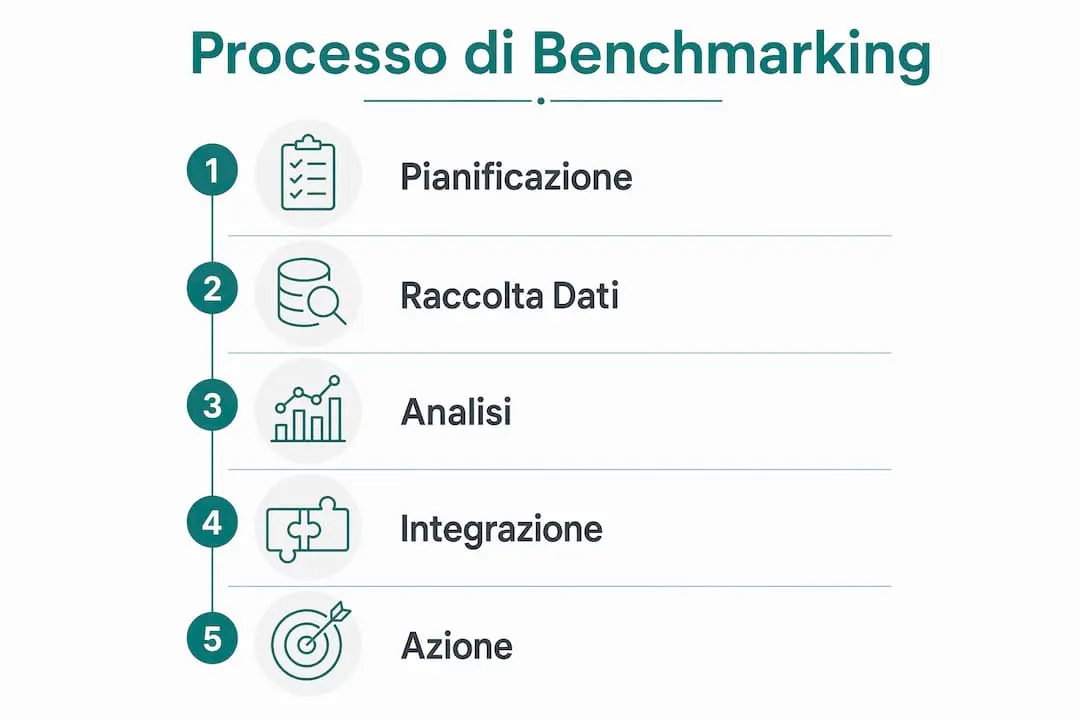
Benchmarking in R&D followsfive distinct phases: planning, data collection, analysis, integration and action. Each stage has a precise output, and skipping one produces unusable data.
- Planning:define which metrics to compare and with which reference, internal or external. Without a clear goal, you collect data without direction.
- Data collection:aggregates quantitative indicators (patents filed, development times, costs per project) and qualitative indicators (quality of technical documentation, methodological rigor).
- Analysis:Compare the data with the chosen reference and identify gaps. Here we separate benchmarking from static competitive analysis: we don't just look at who is ahead, but why and by how much.
- Integration:translate gaps into concrete objectives and assign them to project managers. Without this step, the analysis remains a document.
- Action:implement changes and measure results in the next cycle.
The recommended frequency is monthly or quarterly. An annual cycle is too slow to capture changes in high-speed technology markets.
A tip: focuses the analysis on qualitative gaps rather than on the volume of data collected. A report with thirty indicators that no one reads is worth less than three metrics that the team acts on every week.
What criteria qualify an R&D project for benchmarking?
A common mistake is to apply benchmarking to any internal development activity, including those that fall outside the technical definition of R&D. TheOECD Frascati Manualestablishes five cumulative criteria that each project must meet to be classified as research and development.
The five criteria are:
- New:the project must produce new knowledge, not replicate already known solutions.
- Creativity:requires an original approach based on non-obvious hypotheses.
- Technical uncertainty:Before starting, it must not be possible to know whether the technical result is achievable with the available knowledge. This criterion is distinct from commercial risk.
- Systematicity:the work must follow a structured plan with dedicated resources and traceable documentation.
- Transferability:the results must be capable of being reproduced, communicated or published.
These criteria are not just academic. Italian companies use them to qualify projects for R&D tax credit purposes, with rigorous documentary checks by the Revenue Agency. A project that fails all five criteria is not R&D under the law, and benchmarking applied to that project does not produce valid data for compliance.
| Frascati criterion | Verification question |
|---|---|
| News | Is this result already known in the literature or in the industry? |
| Creativity | Is the approach based on non-trivial hypotheses? |
| Technical uncertainty | Was the outcome predictable before the study? |
| Systematicity | Is there a documented plan with allocated resources? |
| Transferability | Can the results be communicated or replicated? |
A tip: Before starting a benchmarking cycle, conduct an internal audit of active projects using this checklist. Excluding unqualified projects avoids polluting the comparison data with activities that are not R&D.
Modern tools and methodologies for benchmarking in R&D
Artificial intelligence has changed the speed with which an R&D team can collect and interpret benchmark data. A monitoring system with AIanticipates emerging technological trendswith a lead of 6–18 months compared to the industry average. This is not a marginal benefit: in industries like pharmaceuticals or semiconductors, 12 months of lead time can determine the success or failure of a product.
Modern tools for benchmarking in R&D fall into two main categories:
- Public Benchmarks:shared datasets and rankings that measure the performance of technologies or models against industry standards. They are useful for orientation, but exposed to the risk of data contamination and overfitting.
- Internal benchmarks:developed and documented by the company itself, they measure specific performance of the operating context. They are more reliable for governance and compliance.
A concrete case isLifeSciBench, the benchmark developed by OpenAI to measure the effectiveness of artificial intelligence models in real biological research. The success rate of the GPT-Rosalind model on real tasks stops at 36.1%. This data shows that even the most advanced AI models have significant gaps when applied to specific scientific problems, and that blindly relying on AI tools without an internal reference benchmark is a real operational risk.
The real competitive advantage does not come from using AI for benchmarking, but from building internal benchmarks that AI cannot saturate. When a model hits 100% on a public benchmark, that benchmark has stopped being useful. More advanced R&D teams update their benchmarks before this happens.
To integrate AI and data into the process, a practical approach involves a dedicated technology scout role with 2–4 hours per week dedicated to monitoring scientific literature and emerging patents. This flow of information fuels the benchmarking cycle and transforms raw data into actionable insights. To learn more about how AI changes project management, see the articles onAI and automationof Viniciolupo offer use cases applied to the R&D context.
What are the concrete benefits of benchmarking for R&D teams?

Benchmarking produces measurable value in three distinct areas: operational performance, decision support and regulatory compliance.
On the performance front, systematic comparison allows you to identify where a team is wasting time or resources compared to industry benchmarks. Popular metrics include time-to-prototype, cost per patent filed, proof-of-concept success rate, and percentage of projects that pass the experimental development phase.
For decision support, benchmarking provides managers with objective data to allocate budgets and prioritize projects. Without this data, decisions are based on internal perceptions that often overestimate team capabilities and underestimate gaps relative to the market.
On the regulatory front,documented benchmarksthey are an integral part of the governance systems required by the EU Regulation on artificial intelligence and the ISO/IEC 42001 standard. Companies that develop or use AI systems in R&D contexts must demonstrate that performance assessments are based on verifiable methodologies. A well-documented internal benchmark is the strongest evidence available. For a guide ongovernance and regulatory complianceapplied to technological contexts, there are specific resources for IT and R&D managers.
The most effective strategies for incorporating benchmarking into the project cycle include:
- Define benchmark KPIs in the project planning phase, not after the fact.
- Assign responsibility for the benchmarking cycle to a specific role on the team, don't distribute it generically.
- Separate compliance benchmarks (Frascati criteria, ISO) from technology performance benchmarks: they serve different purposes and require different metrics.
- Document each cycle with a structured report that includes the corrective actions decided, not just the data collected.
Theinvestments in R&Din industrial companies they represent on average 3.5% of turnover, while high-tech companies reach 7%. With gross margins between 60% and 90% in the most advanced sectors, benchmarking becomes the tool with which a manager justifies every percentage point of research spending.
Key points
Benchmarking in R&D produces real value only when it transforms comparison data into corrective actions integrated into the life cycle of projects, not when it stops at the collection of indicators.
| Point | Details |
|---|---|
| Five-step process | Plan, collect, analyze, integrate and act: skipping a step makes the data unusable. |
| Mandatory Frascati criteria | Only projects that meet all five criteria produce valid benchmark data for tax compliance. |
| Internal vs public benchmarks | Documented internal benchmarks are more reliable for governance and auditing than public datasets. |
| AI as an accelerator | AI tracking anticipates trends by 6–18 months, but requires internal benchmarks to validate results. |
| Cyclic frequency | Monthly or quarterly cycles keep benchmarking useful; Annual cycles are too slow for technology markets. |
Benchmarking I've seen actually works
After years of working with R&D teams in complex technology contexts, I've observed a recurring pattern: the organizations that get the most value from benchmarking aren't the ones with the largest datasets. They are the ones with the most disciplined processes.
The most common problem is not a lack of data. It is the overabundance of data without an attached decision mechanism. I've seen teams produce forty-page monthly reports that no one read, while actual performance gaps remained unchanged for entire quarters.
The turning point comes when benchmarking stops being a reporting activity and becomes part of the team's operational rhythm. This means that each benchmarking cycle must end with a list of actions, not with a list of observations. The distinction seems trivial. In practice, everything changes.
Another point that I often underestimate in conversations with managers: the strategic value of qualitative comparison almost always exceeds quantitative one. Knowing that a competitor has filed 20% more patents says nothing about how to improve. Understanding that their technical documentation is more structured and that this speeds up regulatory approval cycles is information you can act on.
For managers who want to drive this process effectively, the most direct advice I can give is: start with three metrics, not thirty. Build the loop around those, prove that the process works, then expand.
— Vinicio
Viniciolupo and the management of R&D benchmarking
Keeping track of a benchmarking process across multiple R&D projects requires a tool that aggregates data, tracks corrective actions and keeps documentation in order for audits. Viniciolupo was built exactly for this context.
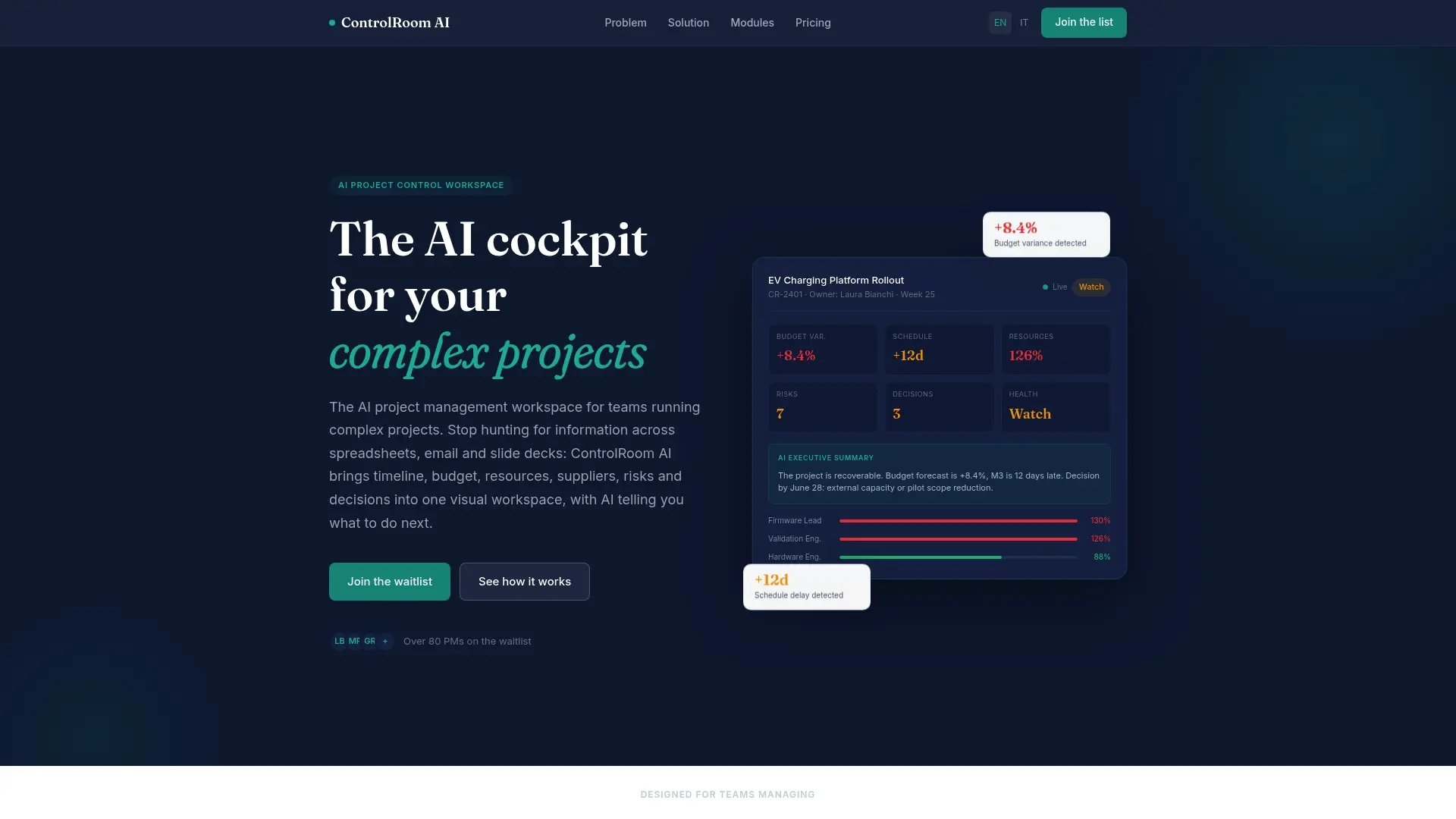
ControlRoom AIis Viniciolupo's workspace for managing complex projects: it allows you to monitor benchmarking cycles, assign responsibility for corrective actions and maintain the traceability required by regulatory compliance. For those who want to leave without obligation, ifree AI toolsby Viniciolupo include tools for process analysis and operational readiness assessment, directly applicable to R&D benchmarking cycles. For more complex technology decisions, theR&D advisorysupports managers in evaluating and choosing the most suitable methodologies for the specific context.
Frequently asked questions
What is benchmarking in R&D in summary?
Benchmarking in R&D is the systematic comparison of research performances and processes with internal or external standards to identify gaps and improve results. It is divided into five phases: planning, data collection, analysis, integration and action.
What are the Frascati Manual criteria for qualifying an R&D project?
The five cumulative criteria are novelty, creativity, technical uncertainty, systematicity and transferability. A project must satisfy all of them to be classified as R&D for tax and regulatory purposes in Italy.
How often should benchmarking be performed in R&D?
The recommended frequency is monthly or quarterly. An annual cycle is not sufficient to capture changes in high-speed technology markets.
What is the difference between public benchmarks and internal benchmarks?
Public benchmarks are shared datasets useful for orientation, but exposed to risks of contamination and overfitting. Internal benchmarks, developed and documented by the company, are more reliable for governance and regulatory compliance.
How is AI used in R&D benchmarking?
AI allows you to monitor scientific literature and emerging patents continuously, anticipating technological trends with an advantage of 6–18 months. However, the results must be validated with internal benchmarks specific to the team's operating context.