

Coordinating a distributed development team means implementing structured processes, explicit roles and targeted tools to overcome distance and asynchronous collaboration. A distributed team is a group of developers working from different locations, often in different time zones, without a shared physical location. The expected result is not just the delivery of the software: it is high productivity, consistent quality and cohesion between people. Achieving this requires three key elements: organizational clarity, psychological safety and measurable KPIs. Without these three pillars, even the most talented teams lose efficiency.
What are the fundamental requirements for coordinating distributed development teams
Coordinating remote teams starts from a solid documentary base. Vague roles and unwritten processes generate ambiguity which, over time, become concrete operational blocks. GitLab manages over 1,300 collaborators through acentralized documentationof roles and workflows. This model demonstrates that written transparency is not a luxury: it is the infrastructure of distributed work.
The minimum requirements for effective coordination are:
- Documented roles:each team member knows their responsibilities and boundaries with other roles.
- Standardized operational processes:the workflows, from code review to release, follow written procedures accessible to all.
- Integrated technological tools:a project management platform, a synchronous and an asynchronous communication channel, and a shared knowledge base.
- Time Overlay Window:at least 2 hours a day where all team members are available at the same time.
- KPIs and periodic recalibration:measurable objectives reviewed on a regular basis to maintain alignment.
The overlay window is often underestimated. Two hours of shared availability is enough to resolve critical blocks, make quick decisions and maintain cohesion without overloading the calendar.
| Requirement | Recommended frequency |
|---|---|
| Daily meeting | Every day, 10–15 minutes |
| KPI recalibration | Every 4–6 weeks |
| Process review | Every quarter |
| Documentation update | I continue, with every change |
A tip: Create a “who does what” document accessible to everyone and update it whenever a role changes. This single document reduces 90% of recurring questions in communication channels.
How to structure processes and communications to foster trust
Thepsychological safetyit is the main predictor of success in high-performance teams. It means that every team member can admit a mistake, raise a concern or propose an idea without fear of negative consequences. At a distance, building this condition requires deliberate effort: it doesn't happen by chance.
An effective communication routine is built on three levels:
- Daily meeting (10–15 minutes):quick update on the status of jobs, blocks and priorities of the day. No presentations, no long discussions.
- Biweekly or monthly retrospectives:space to analyze what worked, what didn't and how to improve processes. This is the time when the team learns from itself.
- Structured asynchronous channel:each relevant decision is documented in writing, with context and justification. Anyone who wasn't present can catch up without asking.
The most insidious risk in distributed communication is apparent consensus. When everyone says yes to avoid conflict, the team produces alukewarm executioninstead of quality decisions. Constructive conflict, on the other hand, leads to better solutions and prevents groupthink.
«The main managerial mistake is confusing apparent consensus with real alignment. A team that never discusses isn't collaborating: it's avoiding the problem."
To manage conflict productively, establish explicit rules: every criticism must be accompanied by an alternative proposal. This turns disagreement into a creative process instead of a personal friction.
A tip: Dedicate the last 5 minutes of each retrospective to a direct question: "Is there something we're not saying?" This question alone unlocks conversations that otherwise remain hidden for weeks.

Which tools to use for coordination in distributed teams
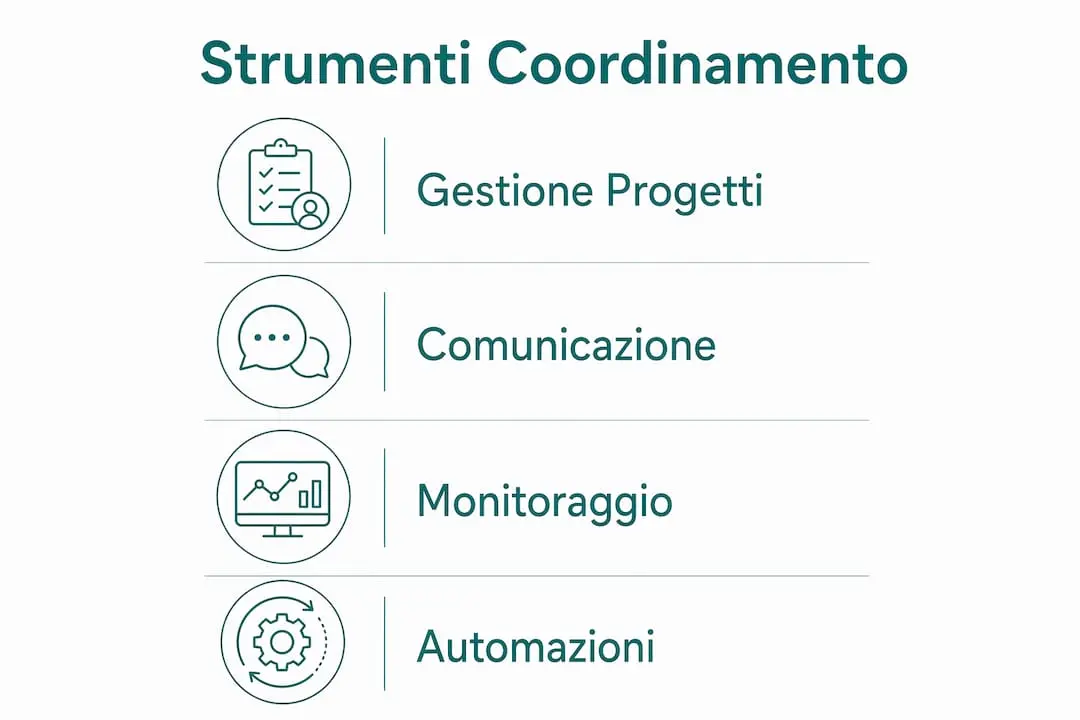
The tools fordistributed team communicationthey are divided into four functional categories. Choosing one tool per category, instead of accumulating ten, reduces cognitive load and increases team adoption.
| Category | Main function | Examples of approach |
|---|---|---|
| Project management | Kanban, sprints, backlogs | Visual boards with clear states |
| Synchronous communication | Videocall, real-time chat | Thematic channels, not generic ones |
| Asynchronous communication | Video emails, recorded messages | Updates without meetings |
| Documentation | Knowledge base, wiki | Single source of truth |
Video emails deserve specific attention. They enable fast, contextual updates without interrupting developers' deep work blocks. A 3-minute video message often replaces a 30-minute meeting and gives the recipient the freedom to respond when they're ready.
For monitoring, centralized KPI dashboards provide instant visibility into project status without requiring manual updates. Viniciolupo integrates this function into its platformControlRoom AI, designed for technical teams managing complex projects in distributed environments.
Automations reduce repetitive coordination overhead. Automatic status change notifications, deadline reminders, and periodic reports generated without manual intervention free up time for high-value work. A good systemprocess managementit automates everything predictable and leaves decisions that require judgment to people.
A tip: Before adopting a new tool, ask the team: “Does this solve a real problem or add an extra step?” If the answer isn't immediate, it's useless.
How to overcome common challenges in distributed development teams
The challenges of remote coordination are predictable. Knowing them in advance allows you to prepare instead of reacting in an emergency.
- Time zones:the 2 hour overlap window should be protected as an immovable meeting. Outside that window, everything must work asynchronously.
- Motivation and cohesion:Physical distance erodes implicit trust more slowly than explicit trust, but with more profound effects on turnover. Moments of informal cohesion, even brief ones, counteract this phenomenon.
- Meeting burnout:Limiting meetings to set slots and adopting techniques such as timeboxing and 90-minute work blocks protects developer concentration.
- Operational blocks:aunclear roleblocks even the most competent professional. The solution is not more control: it is more clarity on context and responsibility.
- Continuous feedback:without regular feedback, problems accumulate into crises. A short, even informal, feedback loop keeps the team calibrated.
Burnout in distributed teams has a specific cause: the lack of boundaries between work and private life, accentuated by the absence of a physical office. Establishing core hours for synchronization and respecting off-hours is not a matter of generic company culture. It is an operational decision that the team leader must make and communicate explicitly.
A tip: Include a simple rule in your team contract: no urgent messages outside of core hours without a documented reason. This rule alone reduces availability anxiety and improves the quality of work.
Key points
Coordinating a distributed development team requires documented processes, psychological safety and KPIs recalibrated every 4–6 weeks: without these three elements, distance turns any ambiguity into an operational block.
| Point | Details |
|---|---|
| Role documentation | Each responsibility must be written down and accessible: it reduces ambiguity and repetitive questions. |
| Overlay window | At least 2 hours per day of shared availability for quick decisions and critical blocks. |
| Psychological safety | Creating space for constructive disagreement prevents groupthink and improves decisions. |
| Tools by category | Only one tool per function reduces cognitive load and increases adoption. |
| Feedback and recalibration | KPIs reviewed every 4–6 weeks keep the team aligned with real goals. |
My experience with distributed teams: What really works
I've worked with distributed teams in very different contexts, from startups with three developers in three different countries to organizations with dozens of people across multiple time zones. The most counter-current lesson I have learned is this: the problem is almost never technology. It's clarity.
When a distributed team struggles, the first reaction is to look for a new tool. A different Slack channel, a more detailed Jira board, a better video conferencing platform. It rarely works. What works is going back to the fundamentals: who decides what, how you document a decision, when you synchronize and why.
Trust in distributed teams is built through consistency, not virtual team building activities. A leader who sticks to schedules, documents decisions, and responds to blocks predictably builds more trust than any online retreat.
I have a precise position on artificial intelligence: AI supports coordination, but does not replace empathetic communication. Tools like Viniciolupo can automate KPI monitoring and process management, but having a difficult conversation with a struggling team member remains a human responsibility. Investing in clear processes and team leader communication skills produces more lasting results than any automation.
The mistake I see most often is treating coordination as a technical problem rather than an organizational problem. Thetechnological strategymatters, but clarity on team roles and culture comes second.
— Vinicio
Viniciolupo for distributed team management
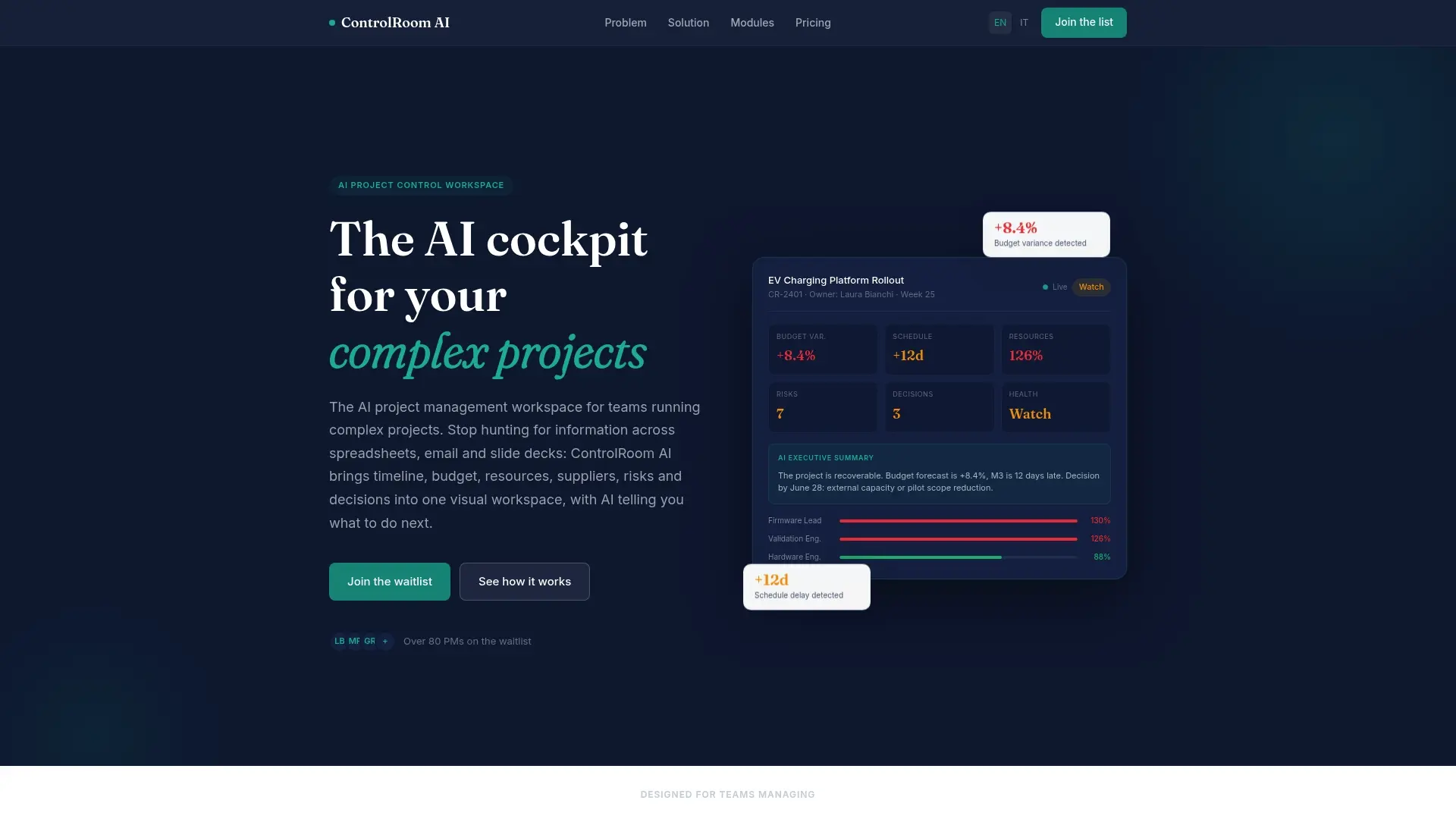
Viniciolupo was created to respond to a concrete problem: managing complex projects and distributed teams without losing visibility or control. The platformControlRoom AIcentralizes KPI tracking, process documentation, and team communication in a single work environment designed for technical teams. There's no need to configure ten different tools: everything you need to coordinate distributed agile development is already integrated. Those who manage teams in highly complex environments find in Viniciolupo an operational point of reference, not another software to learn. Check now how it works with ifree toolsavailable without registration.
Frequently asked questions
What is a distributed development team?
A distributed development team is a group of developers working from different locations, often in different time zones, without a shared physical location. Coordination occurs through digital tools and documented processes.
How many hours of overlap do you need for a distributed team?
A minimum overlap window of 2 hours per day is sufficient to handle critical blocks and quick decisions. Outside of this window, the job must run asynchronously.
How often do you recalibrate KPIs in a distributed team?
KPIs need to be recalibrated every 4–6 weeks to keep goals aligned with the reality of the project. A rarer recalibration leaves the team working on outdated metrics.
How do you prevent burnout in a remote team?
Limiting meetings to set slots and adopting 90-minute work blocks protects concentration. Establishing explicit core hours and respecting closing times reduces availability anxiety.
What is the difference between apparent consensus and real alignment?
Apparent consensus occurs when team members say yes to avoid conflict, without actually sharing the decision. Real alignment emerges from open discussion and constructive conflict.