
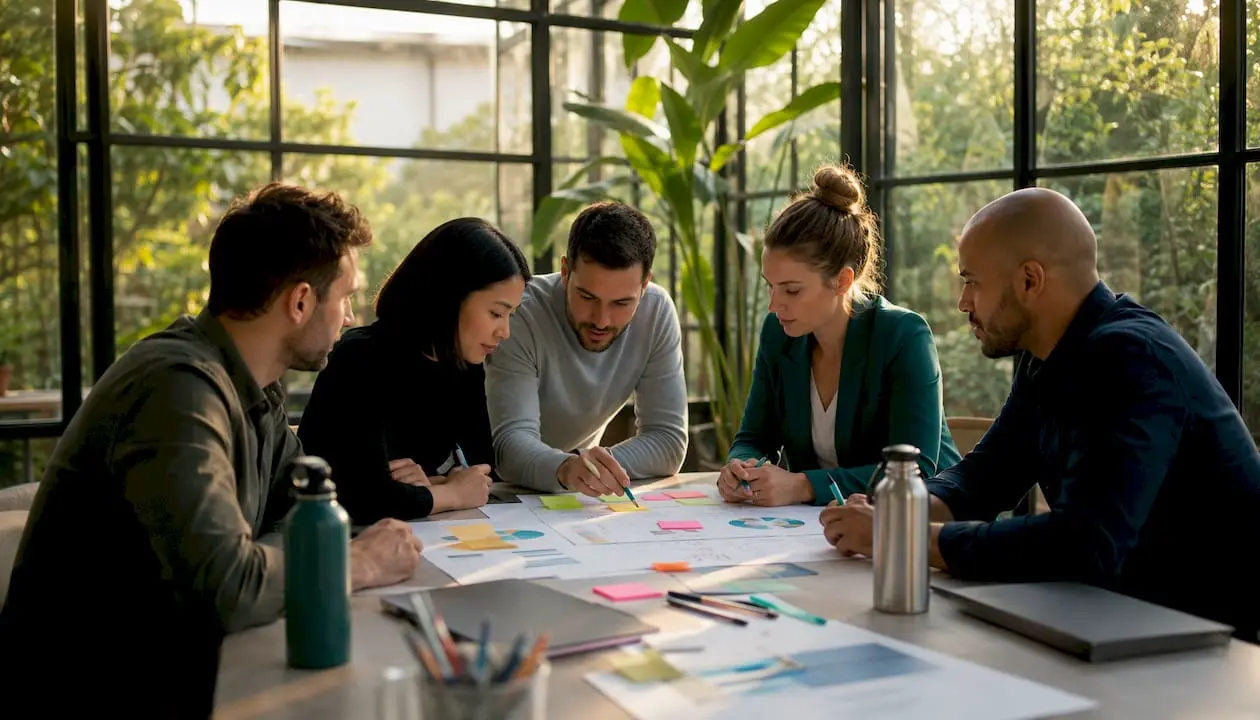
Modern project management is the systematic application of knowledge, techniques and tools to lead a project from initiation to delivery, respecting time, cost and quality constraints, as defined by theISO 21502:2020 standard. It's not just about planning activities: it's a discipline that integrates traditional methods with agile and hybrid approaches, putting flexibility, proactive risk management and the creation of concrete value for the organization at the centre.
Compared to classic project management, modern project management stands out for some precise elements:
- Adaptability: plans change during construction without losing control of the objectives
- Hybrid approach: Waterfall, Scrum and Kanban coexist in the same project depending on the phase
- Value orientation: every decision is evaluated in terms of real benefit, not just budget compliance
- Continuous risk management: risks are identified and monitored from the beginning, not just when they appear
- Cultural leadership: the project manager leads people and organizational culture, not just tasks and deadlines
- Integrated digital tools: Monitoring software, automation and artificial intelligence enter the daily operational flow
This evolution is not theoretical. Those managing complex projects in Italy in 2026 find themselves working with distributed teams, changing requirements, and competitive pressures that require rapid responses. Knowing the principles of modern project management is not an optional advantage: it is the basis for not losing control.
Why project management is crucial for today's companies
Managing a project without a structured method means relying on luck. Companies that adopt recognized project management practices gain much more precise control over time, cost and quality, reducing the risk of overruns and delays that erode margins and reputation.
The concrete advantages are distributed on several levels:
- Resource control: knowing at all times who does what, with what priority and at what cost
- Structured communication: Fewer unnecessary meetings, more updates targeted to the right stakeholders
- Quick adaptation: When requirements change, a methodical team reacts in hours, not weeks
- Measurable quality: Project KPIs make problems visible before they become crises
- Stakeholder satisfaction: Aligned expectations from the start produce less conflict and more trust
An often underestimated aspect concerns innovation. Companies that use agile methodologies in their development processes are able to adapt to market changes with a speed that purely sequential models do not allow. Project management thus becomes an enabler of innovation, not just a control tool.
A tip: Before choosing a methodology, map your projects by type of uncertainty: stable requirements call Waterfall, volatile requirements call Agile, and most real projects call a hybrid.
What are the phases of a project's life cycle?
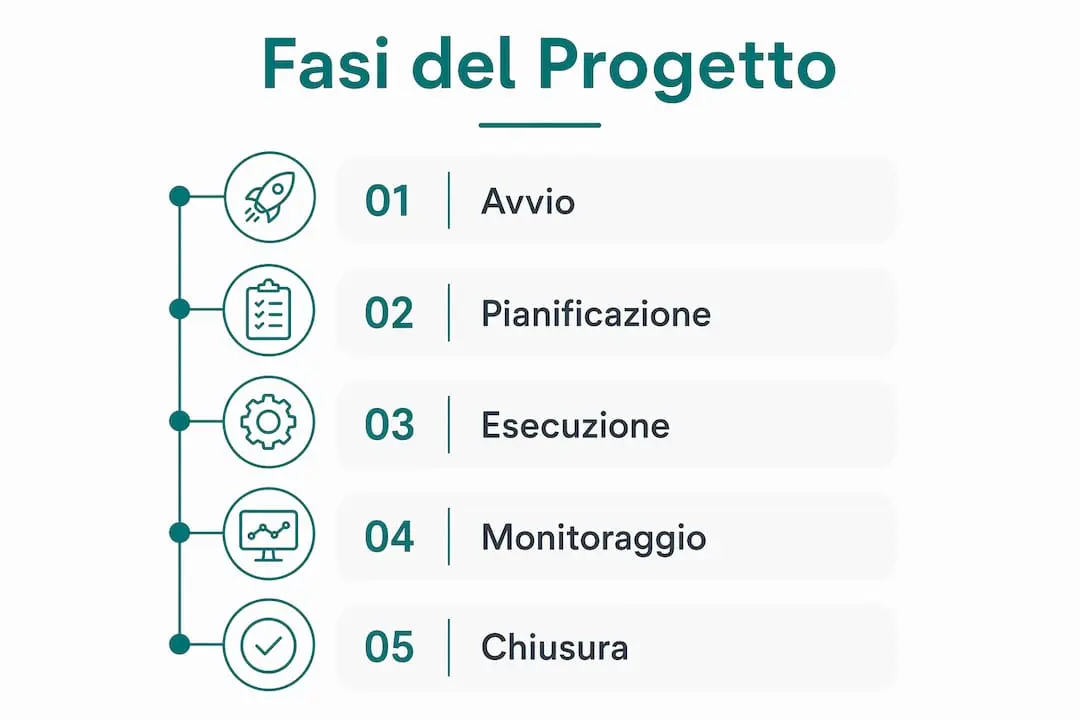
Theproject life cycleis divided into five standard phases, each with precise responsibilities and defined outputs.
The five operational phases
- Startup: the objective is defined, feasibility is assessed and the project manager is appointed. The result is the Project Charter, a document that formally authorizes the project.
- Planning: the detailed work plan is built, time and costs are estimated, the initial risks are identified and the monitoring KPIs are defined. The Gantt chart, introduced by Henry Gantt in the early 20th century, remains a key tool of this phase.
- Execution: the team carries out the planned activities. The project manager coordinates resources, resolves impediments and maintains communication with stakeholders.
- Monitoring and control: takes place in parallel with the execution. Progress against the plan is measured, variations are managed and corrective actions are activated when necessary.
- Closing: the product or service is delivered, the lessons learned are documented and the project team is formally disbanded.
| Phase | Main activity | Key output |
|---|---|---|
| Startup | Definition of objectives and stakeholders | Project Charters |
| Planning | Estimate times, costs, risks | Project Plan, WBS |
| Execution | Implementation of activities | Intermediate deliverables |
| Monitoring | KPI measurement and change management | Progress report |
| Closing | Delivery and documentation | Closing minutes, lessons learned |
One aspect that distinguishes modern project management from traditional project management is the iterative nature of the process. The phases are not always strictly sequential: in an agile approach, planning and execution alternate in short cycles, with frequent reviews that incorporate real-world feedback.
What does a modern project manager really do?
The project manager is not a meeting coordinator. It is the person who holds together objectives, people, resources and risks in a constantly changing context.
Operational responsibilities are clear:
- Define and update the project plan
- Allocate and manage human and material resources
- Identify and mitigate risks throughout the lifecycle
- Communicate progress to stakeholders with transparency
- Make quick decisions when problems arise
But the skills that make the difference are the less technical ones. Leadership, the ability to manage conflicts, decision making under pressure and effective communication with very different interlocutors are what separates a mediocre project manager from an excellent one.
It's worth clarifying a distinction that often causes confusion: the difference between project managers and PMOs. The project manager manages a single project at an operational level, while the PMO (Project Management Office) coordinates all company projects at a strategic level, providing governance, standards and reporting to management. In large Italian companies, the PMO often reports to the CIO or COO and defines the methodologies that all project managers must follow.
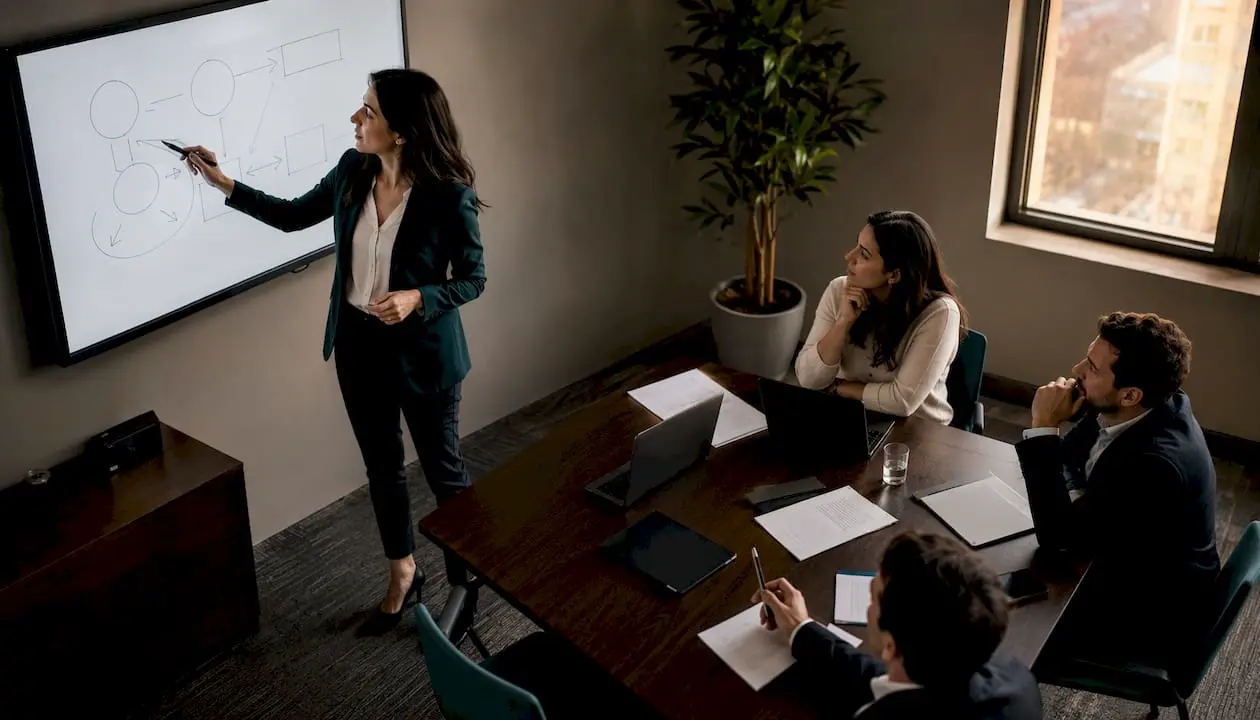
Flexibility is a skill in itself. A project manager who only knows how to apply Waterfall or only Scrum is limited. Those who know how to read the context and choose or combine the right approach generate concrete results.
Waterfall, Scrum, Kanban and hybrid approaches: which to choose?
Agile methodologies in project management have transformed the way teams work, but they have not made the traditional model obsolete. The choice depends on the type of project, the level of uncertainty and the team culture.
Waterfallfollows a linear sequence: each phase is completed before moving on to the next. It works well when the requirements are stable and well defined from the start, such as in infrastructure or regulatory compliance projects. The limit is rigidity: a change in requirements mid-project can cost a lot.
Scrumbreaks the work into short sprints, typically two weeks, with frequent reviews and ongoing feedback from the client. It's the natural choice for software development and any project where requirements evolve. The sprint review ceremony forces the team to deliver measurable value at regular intervals, not just at the end.
Kanban view the workflowon a board with columns representing task statuses. It has no fixed sprints: work flows continuously, with a limit on the number of tasks being processed simultaneously. It is particularly effective for operational teams with ongoing demands, such as technical support or product maintenance.
| Methodology | Ideal for | Strong point | Main limit |
|---|---|---|---|
| Waterfall | Stable and defined requirements | Detailed planning | Little flexibility to changes |
| Scrum | Iterative development with feedback | Quick adaptation | It requires discipline and training |
| Kanban | Continuous and operational flows | Immediate visibility of the work | Less suitable for projects with a fixed deadline |
| Hybrid | Complex and mixed projects | Combine structure and flexibility | Requires experience to balance |
The hybrid approach combines elements of Waterfall and Agile: the general structure is planned with the traditional method, then the individual phases are executed with agile sprints. Many medium-sized Italian companies use exactly this model, especially in digital transformation projects where some components are well defined and others are not.
Digital project management tools like Trello support Kanban natively, while more structured platforms manage Scrum with integrated backlogs, sprint boards and burndown charts. The choice of tool always follows the methodology, not the other way around.
Project culture and proactive risk management
Modern project management goes beyond the technical management of activities. The PMBOK Guide 8th Edition introduces six core principles geared towards value, quality, sustainability and responsible leadership. They are not procedures: they are a change of mentality.
This cultural change manifests itself concretely in risk management. In the traditional model, risks are addressed as they arise. In modern project management, risk management is a continuous process that begins in the initiation phase and never stops. Risks are identified, their probability and impact is assessed, preventive responses are defined and monitored throughout execution.
A concrete example: a team developing a new hardware product in Italy must manage supply risks, technical risks and market risks simultaneously. Thevisibility gap in hardware projectsis one of the most frequent problems: without a continuous monitoring system, delays accumulate silently until they become unmanageable.
A tip: Create a risk register from day one of the project. Update it every sprint or every two weeks. A risk identified early costs much less to manage than an overpreliminary version at an advanced stage.
The value-oriented culture also changes the way you measure results. It is not enough to deliver on time and on budget: the project must generate the expected benefit for the organization. This shifts the project manager's responsibility beyond technical delivery, towards verifying real impact.
What trends are reshaping project management in 2026?
Artificial intelligence has entered project management processes in a concrete way, not just as a promise. The systems ofAI for project managementthey analyze historical data to predict delays, suggest resource reallocations and generate automatic progress reports. The project manager is not replaced: he is freed from repetitive tasks to focus on decisions that require human judgment.

Workflow automation is another structural change. Automatic notifications, status updates, risk escalation, and cross-tool synchronization reduce the administrative burden on teams. In a complex project with ten people, this can be worth hours of work per week.
Thedigitalization of project management in Italyis accelerating, also driven by PNRR funds which have financed digital transformations in public and private companies. Italian SMEs that previously managed projects with Excel sheets are adopting integrated platforms, with immediate benefits on visibility and control.
Three trends deserve special attention in 2026:
- Predictive AI: algorithms that signal in advance which tasks are at risk of slipping, based on team behavior patterns
- Distributed project management: Remote and hybrid teams require tools and processes designed for asynchronous collaboration
- Sustainability as a project criterion: More and more organizations integrate environmental and social KPIs into project success criteria, not just economic ones
How do you manage stakeholders in a modern project?
Stakeholders are all people or organizations that have an interest in the project or are influenced by it: customers, sponsors, internal team, suppliers, regulators. Managing them poorly is one of the most frequent causes of project failure, even when the technical part works perfectly.
The first step is mapping. All stakeholders are identified, their level of interest and influence on the project is assessed, and a differentiated communication strategy is defined. An executive sponsor needs concise updates on progress and key risks. A technical supplier needs detailed specifications and quick feedback. Treating them the same is a mistake.
Proactive communication is key. Stakeholders who receive regular updates, even when the news is not positive, develop trust in the project manager. Those who discover problems late, or worse from colleagues, become obstacles. A two-paragraph weekly report is worth more than a twenty-slide monthly presentation.
Stakeholder involvement also changes based on the methodology. In Scrum, the customer participates in sprint reviews and sees the product evolve with each iteration. In Waterfall, involvement is more concentrated in the initiation and final acceptance phases. The hybrid approach allows you to calibrate the level of involvement based on the phase and type of stakeholder.
Key points
Modern project management integrates agile methods, continuous risk management and cultural leadership to deliver real value, not just technical outputs.
| Point | Details |
|---|---|
| Reference standard | ISO 21502:2020 and PMBOK Guide 8th Edition define the fundamental principles of modern PM |
| Five-stage life cycle | Initiation, Planning, Execution, Monitoring and Closing structure each project |
| Complementary methodologies | Waterfall, Scrum and Kanban combine into hybrid approaches for complex projects |
| Risk as a continuous process | Risk management begins at startup and does not stop until project closure |
| AI and automation in 2026 | Predictive AI frees project managers from repetitive tasks |
Do you want to apply modern project management with concrete tools?
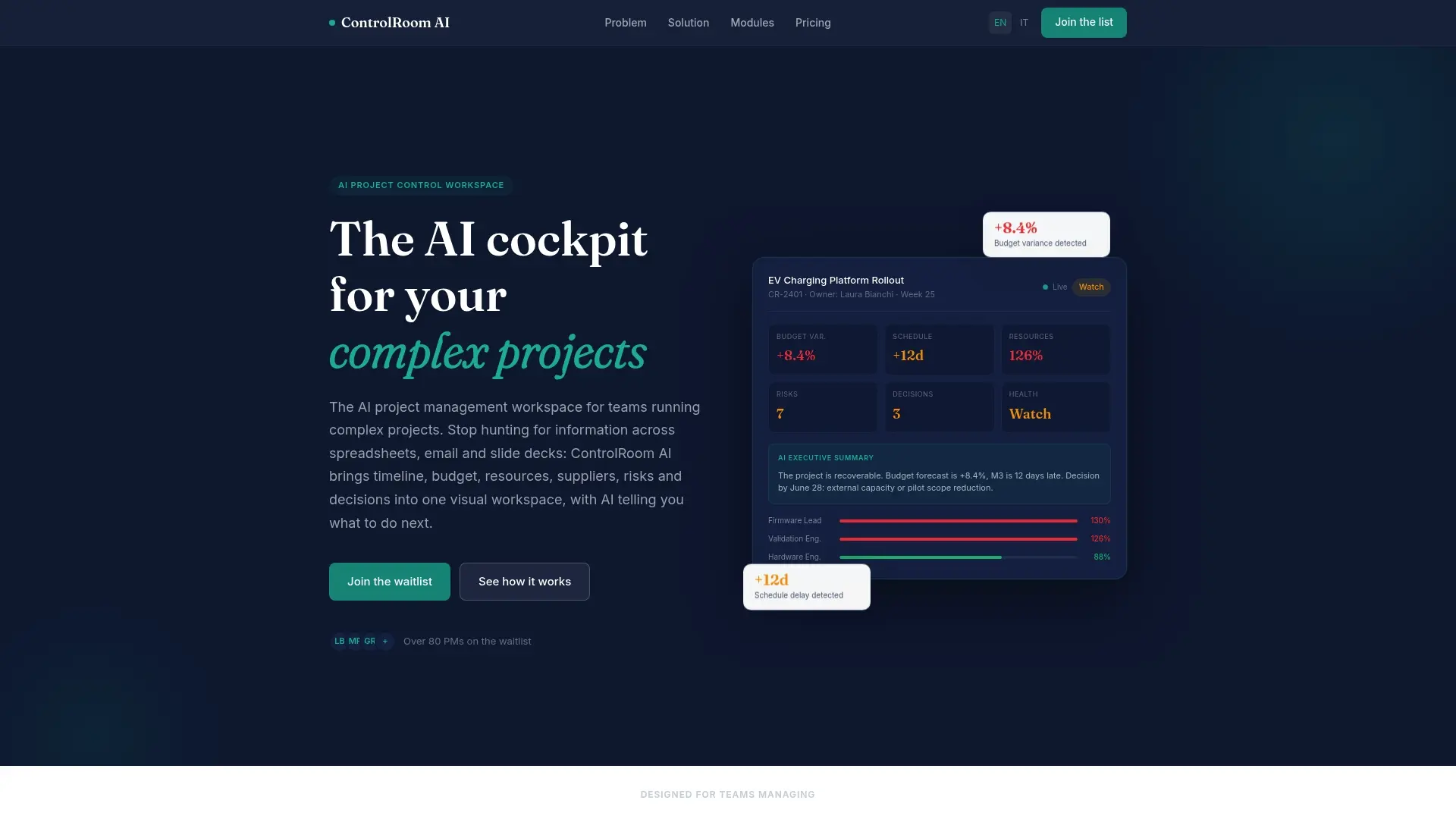
Viniciolupo has developedControlRoom, an AI-assisted workspace designed for those who manage complex projects and research and development activities. From planning to KPI monitoring to real-time risk management – all in a single platform designed for teams that can't afford to lose visibility. Explore iControlRoom use casesto see how it fits into your specific context.